
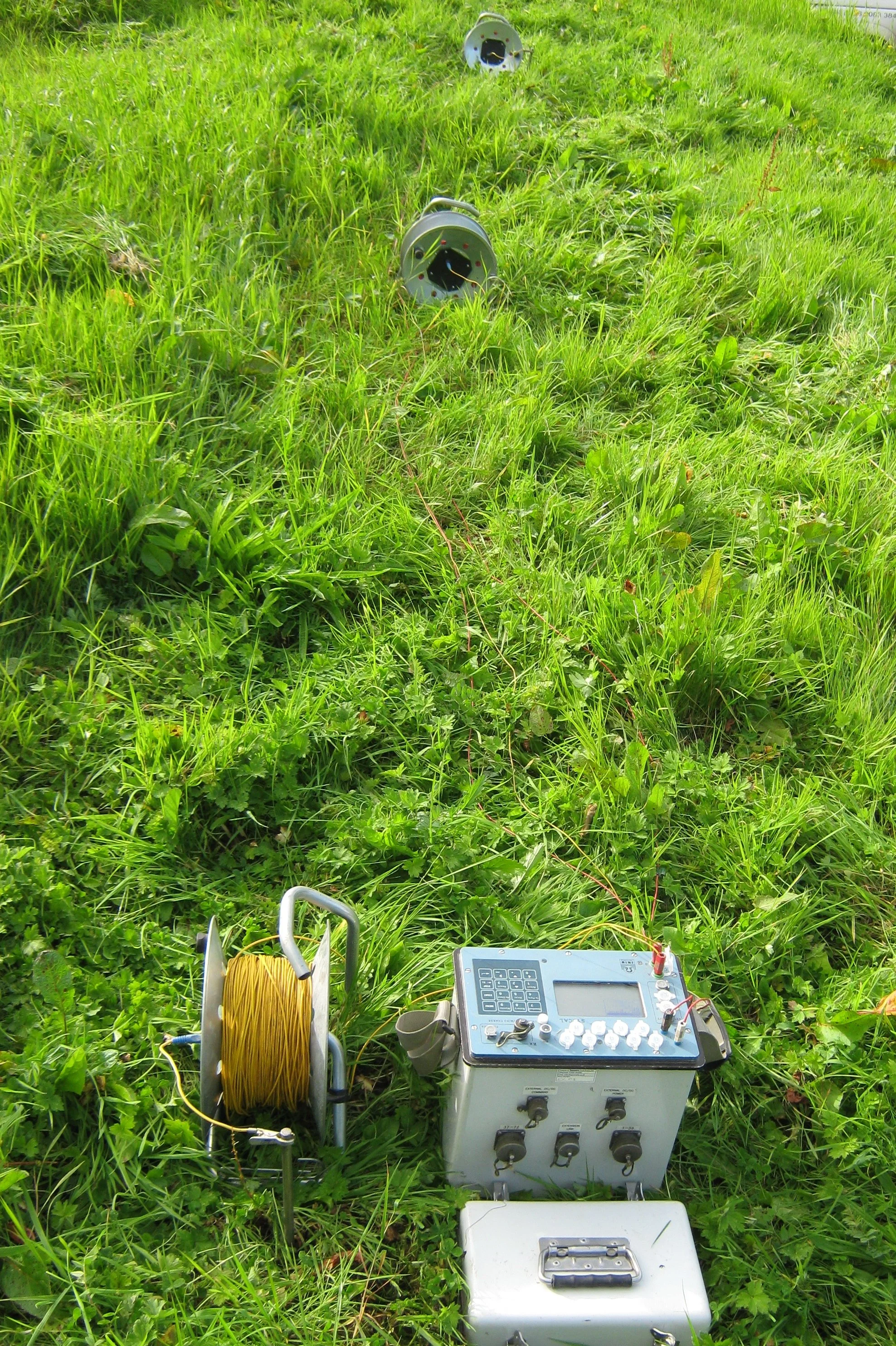
Electrical Conductivity & Resistivity Tests
-
The potential resistivity of the soils can be measured on site using an earth and resistivity meter. The test uses an array of electrodes to induce a current into the ground, where return readings measure potential resistivity. The electrode array is normally set out along two separate perpendicular transects with spacings based on the Wenner pattern, which allows the resistance and earthing properties of the ground to be measured at different depths for underground cable routes.
-
The heat dissipation properties of the ground can be measured in the sidewalls and base of cable trenches or trial pits using a thermal conductivity meter and thermal needle probe that is pushed into the soil.